
Film & Mind: Sorry, Baby
**PACIFIC TIME** : January 30, 2026, 8:00 - 9:30 PM
*** Registration will close at 4:30 PM the day of the event. No registrations are possible after this time, no exceptions. *** See our Policy page for more info.
PLEASE MAKE NOTE OF THIS IMPORTANT INFORMATION:
- You will receive confirmation and details by email. Contact Byrd at byrdb@n-c-p.org if you have questions.
- The program presentation runs from 8 PM to 9:30 PM
- This program is being presented Online Only.
- A signature is required (in the meeting Chat) for CE/CME Credit.
- 1.5 CE/CME credits are offered for this program.
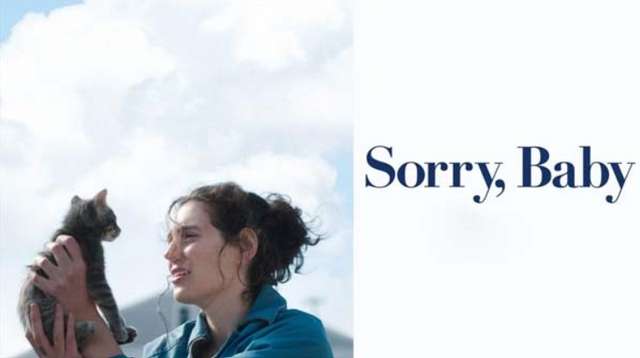
SORRY, BABY (2025), written, directed, and starring Eva Victor, invites us into the intimate-life world of Agnes, a newly minted Liberal Arts professor. The unsavory underbelly of academic power dynamics and the sexual transgressions therein, play out against life's ever-changing seasons and stages.
This off-beat tale, with its penetrating depth, authentic psychological sophistication, and quality cast performances have helped Sorry, Baby attain a 97% approval rating on Rotten Tomatoes.
The NCP Film and Mind Series is delighted to film critic Peter Ranier and Chicago-based analyst David L. Downing to serve up cinematic and psychoanalytic morsels of thought.
Where to watch
HBO Max, Hulu, Amazon Prime (subscriptions), Fandango at Home and others
Schedule:
*** All times listed are Pacific Time (PT) ***
Discussion (on Zoom): 8:00 PM - 9:30 PM - We will hear from our discussants and explore the film together.
We will not watch the film together prior to the discussion. Participants should watch the film beforehand or begin screening on their own before 6:15 pm PT.
Learning Objectives:
As a result of attending this session, participants should be able to:
- Discuss how and whether the application of film discussion in a clinical psychotherapy setting helps patients/clients contextualize their traumatic suffering on their path toward deeper self re-integration.
- Describe multiple paths of resolution and non-resolution of sexual trauma in young adulthood
- Discuss how film-work in the clinical setting can utilize the imagery and encoded narrative struggles to provide vicarious contact with traumatic disturbance sequestered outside of the semiotic provisions of language.
Bibliography:
Cox, D., & Levine, M. P. (2019). Psychoanalysis and Film. In R. Gipps, & M. Lacewing (Eds.), The Oxford Handbook of Philosophy and Psychoanalysis (pp. 513-530). Oxford University Press. https://doi.org/10.1093/oxfordhb/9780198789703.013.31
DeAngelis, T. (2019). “The Legacy of Trauma.” Monitor on Psychology 50(2): 36. ISSN: 1529-4978
Kosanke, G. C., Puls, B., Feather, J. & Smith, J. (2016) Minimizing Intense Relational Dynamics to Enhance Safety: A Thematic Analysis of Literature on Sandtray Work with Adult Trauma Survivors. British Journal of Psychotherapy 32:502-516
Program Coordinators:
Thomas Brod, MD, Apurva Shah, MD and Mary Starks, MA, LPCC
Discussants:
David L Downing, PsyD, ABPP is a board-certified psychoanalyst and clinical psychologist, trained in Los Angeles and now in private practice in Chicago. Nonetheless, he is core NCP faculty and serves as Chair of NCP's Progression Committee. He is a Past-President and Fellow of the American Board and Academy of Psychoanalytic and Psychodynamic Psychology. He is a retired tenured Full Professor and Director of Graduate Programs in Clinical Psychology of the School of Psychological Sciences at the University of Indianapolis. He has held the presidencies of a variety of national and international psychoanalytical organizations, and has lectured widely. Dr. Downing has also been active Fellow and Board member in the American Psychological Association. He is the current President of Section I, Psychoanalyst Practitioners, of the APA's Division of Psychoanalysis. He is the former Dean and a supervising and training psychoanalyst of the Center for Psychoanalytic Study in Chicago. He is also on the core faculty of the Los Angeles Institute and Society for Psychoanalytic Studies and the Psychoanalytic Institute of Northern California. Dr. Downing is the author of a number of papers on the treatment of psychosis, psychoanalysis and film, and psychoanalytical education, to name a few. He is the co-author and co-editor of four books on psychoanalytical matters, including the treatment of psychosis. He was named to the APA's Task Force on Serious Mental Illness and Severe Emotional Disturbance.
Peter Rainer is the film critic for the Christian Science Monitor and the NPR affiliate radio program “Film Week.” He is the author of Rainer on Film: Thirty Years of Film Writing in a Turbulent and Transformative Era. He was a finalist for the Pulitzer Prize in criticism in 1998 and is a three-time winner of the LA Press Club’s criticism award. For fifteen years he served as chairman of the National Society of Film Critics. He previously served as film critic at the Los Angeles Herald Examiner, Los Angeles Times, New Times, and New York Magazine. He has taught and lectured at colleges and film schools around the world. He also wrote and co-produced the A&E documentaries on Sidney Poitier and the Hustons.
IMPORTANT:
- This is online only. It will be held via Zoom.
- Pre-registration is required.
- Target audience: Mental health professionals and open to the public interested in psychoanalytic perspectives. Open to members and the community.
- Level: Every level.
- 1.5 CE/CME credits offered.
- Signature is required for Continuing Education Credit. Zoom attendees must "sign" in and out at the beginning and end of the discussion in the Zoom Meeting Chat to receive credit.
- You will receive a confirmation and event-details message by email after registering. Contact Byrd at byrdb@n-c-p.org if you have questions.
FEES:
$25 with CE Credit
$15 without Credit
Free for NCP Psychoanalysts-in-Training and Students
"How do I get my CE/CME Credit?"
- Pre-Register below
- If you are registering for the first time you will receive a welcome email. You must follow the directions in this email to complete your registration in order to access your certificates.
- "Sign" in and "sign" out during the event (by typing your full name into the chat). This is how we record your attendance at the event.
- Wait 10 business days.
- Download your Certificate on the NCP website.
CONTINUING EDUCATION CREDIT
PHYSICIANS: This activity has been planned and implemented in accordance with the accreditation requirements and policies of the Accreditation Council for Continuing Medical Education (ACCME) through the joint providership of American Psychoanalytic Association and the New Center for Psychoanalysis. The American Psychoanalytic Association is accredited by the ACCME to provide continuing medical education for physicians.
The American Psychoanalytic Association designates this live activity for a maximum of 1.5 AMA PRA Category 1 Credit(s)™. Physicians should claim only the credit commensurate with the extent of their participation in the activity.
The APsA CE Committee has reviewed the materials for accredited continuing education and has determined that this activity is not related to the product line of ineligible companies and therefore, the activity meets the exception outlined in Standard 3: ACCME's identification, mitigation and disclosure of relevant financial relationship. This activity does not have any known commercial support.
PSYCHOLOGISTS: The New Center for Psychoanalysis is approved by the American Psychological Association to sponsor continuing education for psychologists. The New Center for Psychoanalysis maintains responsibility for this program and its content. Psychologists must report CE credits directly to MCEP using the attendance certificate to verify attendance. Please note that a psychologist must attend the CE program in its entirety in order to receive credit.
SOCIAL WORKERS, MARRIAGE and FAMILY THERAPISTS (LCSW, LMFT, ASW, IMF, LEP, LPCC, PCCI): The New Center for Psychoanalysis offers continuing education via the organizations listed above whose requirements meet the course content requirements set by the California Board of Behavioral Sciences (see 16 CCR section 1887.4.0 for General CE Course Content Requirements). Acceptance of the CE credits for this activity is at the discretion of the licensing board.