
Hoarding the Future: Generational Anxieties and Their Implication for Psychoanalytic Training and Treatment
**PACIFIC TIME**: January 24, 2026, 10:00 AM - 4:00 PM
Registration closes at 4:30 PM PT the day before an event. Unfortunately, late registrations can not be accommodated.
PLEASE MAKE NOTE OF THIS IMPORTANT INFORMATION:
- This program is being presented in person AND on Zoom.
- Pre-registration is required. You will receive confirmation and details by email.
- 4.5 CE/CME credits are offered for this program. Signature is required for CE/CME Credit.
- Contact Byrd at byrdb@n-c-p.org if you have questions.
NCP Presents:
Hoarding the Future:
Generational Anxieties and Their Implication for Psychoanalytic Training and Treatment
Through panel presentations and large and small group discussions, this program will address the nature of generational anxieties (parricidal, filicidal, and siblicidal) as these emerge in the varying aspects of psychoanalytic institutions.
Presenters Brian Ngo-Smith and Teresa Méndez will share reflections from their clinical work as well as from supervisory and other collegial relationships, to address the impact of these anxieties as they lead to resistances to progression, succession, and diversification of learning opportunities.
Attendees will be invited to engage with the presenters and with one another to grapple with the vicissitudes of psychoanalytic training as these also parallel other sites of systemic breakdown when confronted with diverse identities that come to represent a threat to the status quo. Particular attention will be paid to the ways in which erotic dimensions of cross-generational dynamics may get obscured by more conflictual and destructive enactments.
By interrogating and exploring the complex sociocultural and generational dynamics that are enacted in psychoanalytic training and in psychoanalytic treatment, these presentations will invite learners to reflect on their own training experiences – both as student and teacher, supervisee and supervisor – in order to think more critically about how this impacts the clinical care they provide to their patients, including with respect to therapeutic interventions that may be overlooked due to unconscious allegiances to figures on whom learners depend.
Schedule:
10 AM – 11:30 AM: Teresa Méndez and Brian Ngo-Smith in Conversation
11:30 AM – 12:30 PM: Lunch Break
12:30 PM – 2 PM: Group Discussion, with Small Breakout Groups
2 PM – 2:30 PM: Break
2:30 PM – 4 PM: Group Discussion and Closing Reflection
Learning Objectives:
As a result of attending this session, participants should be able to:
- Describe the nature and impact of parricidal and filicidal anxieties in the analytic dyad, the supervisory dyad, and the training milieu
- Explain the impact of analysts’ identifications with elder generations on the sequestering of psychoanalytic knowledge from other forms of mental health care
- Discuss the pedagogical and clinical effects of splitting the psychic and the social in the psychoanalytic classroom
- Summarize the historical roots of intolerance for diversity within psychoanalytic institutes
- Predict patterns of resistance to change within psychoanalytic learning environments and prepare strategies for addressing these resistances in order to promote diversities
- Explain pedagogical challenges and opportunities in the psychoanalytic classroom when teaching diverse groups and topics
- Examine the regressive impact of psychoanalytic treatment and training as this necessitates a greater attunement to generational enactments
- Describe the ways conflictual and disguised erotic cross-generational transferences may lead to aggressive and destructive enactments in analytic and supervisory dyads
References:
Hart, A. (2020). Principles for teaching issues of diversity in a psychoanalytic context. Contemporary Psychoanalysis Vol. 56, No. 2-3: 404-417.
Scarff, J, and Scarff, D. (2017). Group affective learning in training for psychotherapy and psychoanalysis. The International Journal of Psychoanalysis 98, 1619-1639.
Morgan, T. (2024). Must we drown in the wake? Notes on addressing racism at psychoanalytic institutes. Group Vol. 38 Number 2-3, 11-47.
Eisold, K. (1994). The intolerance of diversity in psychoanalytic institutes. The International Journal of Psychoanalysis 75, 785-800.
Presenters:
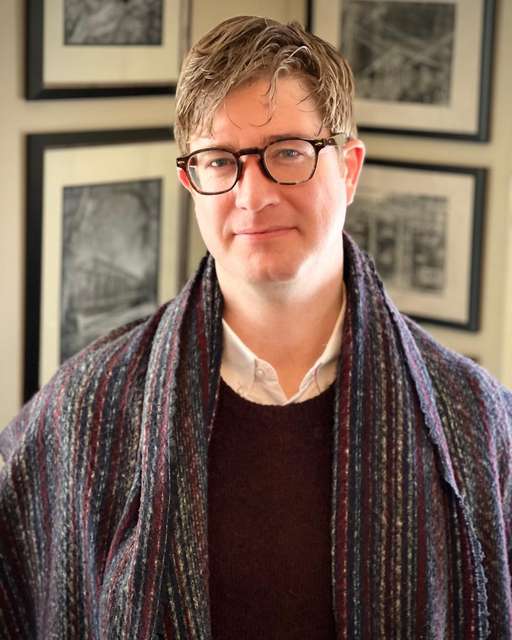 Brian Ngo-Smith, LCSW, BCD-P, FABP is a psychoanalyst and clinical social worker in Denver, CO. He received his MSW from the University of Iowa and completed analytic training at the Denver Institute for Psychoanalysis, where he is now on faculty. Brian has worked in the mental health field for over 20 years in residential, hospital, community mental health, and private practice settings. He is a Past President of the American Association for Psychoanalysis in Clinical Social Work and he was the recipient of the 2024 Ernst and Gertrude Ticho Memorial Award from the American Psychoanalytic Association.
 Teresa Méndez, LCSW-C, LICSW is a clinical social worker and psychoanalyst practicing in Baltimore, MD. She earned her AB in Anthropology from Princeton University and MSW from the Smith College School for Social Work, and completed psychoanalytic training at the Washington Baltimore Center for Psychoanalysis, where she serves on the Diversities, Scholarship, and Ombuds committees. A former journalist, Teresa has presented and published widely on the mixed-race experience and edited a special issue on race and psychoanalysis for Psychoanalytic Social Work, where she is on the editorial board. She is a past President of the American Association for Psychoanalysis in Clinical Social Work, and served as a member of the American Psychoanalytic Association’s Holmes Commission on Racial Equity.
Moderator:
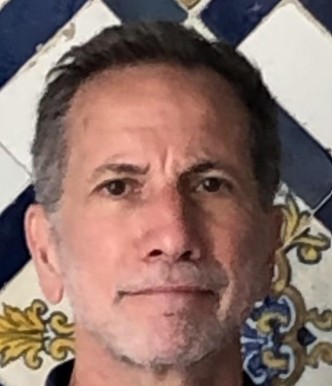 Ethan Grumbach, PhD, FIPA is a member of the New Center for Psychoanalysis in Los Angeles where he teaches the Infant Observation Course and courses on Gender and Sexuality. He is a training and supervising analyst, in 2014 becoming only the 5th openly LGBT APsaA TA/SA . He presents and teaches nationally and internationally on aspects of psychoanalytic and psychotherapy work with Queer individuals as well as infants and their families. Dr. Grumbach is a member of APsaA’s Committee on Gender and Sexuality which he has previously chaired. At the New Center for Psychoanalysis, he is a member of the Diversities and Sociocultural Issues Committee, the Education Committee and the Strategic Advisory Committee. Dr. Grumbach is a member of the Psychoanalytic Center of Northern California. He has completed training in Tavistock Method Infant Observation. He maintains a private practice in Los Angeles where he does Infant Psychoanalysis in addition to analysis and psychotherapy with individuals, families and couples. Most recently he received the Edith Sabshin Teaching Award in 2025.
Coordinated by: Ethan Grumbach, PhD, FIPA, Clare Knudson, PhD, Alison Picard, LMFT, and Brian Stachowiak, LMFT
This program is sponsored by NCP's Diversity & Socio-cultural Inequities Committee
Target Audience:
This program meets the needs of all mental health professionals, including psychiatrists, psychiatric nurses, psychologists, social workers, and marriage and family therapists. All levels.
Format:
This program will be held in person and on Zoom.
RECORDING:
This program will not be recorded.
FEES:
NCP Members registration $78.00 | General registration $98.00 | Students $49.00
CE/CME Credits:
"How do I get my CE/CME Credit?"
- Pre-Register below
- If you are registering for the first time you will receive a welcome email. You must follow the directions in this email to complete your registration in order to access your certificates.
- "Sign" in and "sign" out during the event (by typing your full name into the chat). This is how we record your attendance at the event.
- Wait 5-10 business days.
- Download your Certificate on the NCP website.
CONTINUING EDUCATION CREDIT
PHYSICIANS: This activity has been planned and implemented in accordance with the accreditation requirements and policies of the Accreditation Council for Continuing Medical Education (ACCME) through the joint providership of American Psychoanalytic Association and the New Center for Psychoanalysis. The American Psychoanalytic Association is accredited by the ACCME to provide continuing medical education for physicians.
The American Psychoanalytic Association designates this live activity for a maximum of 4.5 AMA PRA Category 1 Credit(s)™. Physicians should claim only the credit commensurate with the extent of their participation in the activity.
The APsA CE Committee has reviewed the materials for accredited continuing education and has determined that this activity is not related to the product line of ineligible companies and therefore, the activity meets the exception outlined in Standard 3: ACCME's identification, mitigation and disclosure of relevant financial relationship. This activity does not have any known commercial support.
PSYCHOLOGISTS: The New Center for Psychoanalysis is approved by the American Psychological Association to sponsor continuing education for psychologists. The New Center for Psychoanalysis maintains responsibility for this program and its content. Psychologists must report CE credits directly to MCEP using this document to verify attendance. Please note that a psychologist must attend the CE program in its entirety in order to receive credit.
SOCIAL WORKERS, MARRIAGE and FAMILY THERAPISTS (LCSW, LMFT, ASW, IMF, LEP, LPCC, PCCI): The New Center for Psychoanalysis offers continuing education via the organizations listed above whose requirements meet the course content requirements set by the California Board of Behavioral Sciences (see 16 CCR section 1887.4.0 for General CE Course Content Requirements). Acceptance of the CE credits for this activity is at the discretion of the licensing board.